Why Am I So Emotional?
You're not broken. You're receiving information at a higher frequency. Learn why emotions are signals, not problems, and how to work with your sensitivity.

You’re not broken. You’re receiving information at a higher frequency. Learn why emotions are signals, not problems, and how to work with your sensitivity.
You cry at movies. You feel things others seem to brush off. A harsh tone in someone’s voice throws off your whole day. You’ve been told you’re “too sensitive” your entire life. Maybe you’ve tried to toughen up, learned to hide it, or convinced yourself something is wrong with you. But here’s what no one told you: your sensitivity isn’t a character flaw. You’re running at a higher bandwidth. You’re receiving information—emotional, energetic, intuitive—that other people are missing.
The problem isn’t that you feel too much. The problem is that you’ve been taught to suppress it, shame it, or try to solve it. What if instead you learned to interpret emotions as the frequency signals they actually are?
Emotions as Frequency Information, Not Dysfunction

Most people think of emotions as reactions to external events. Something happens, you feel something in response. Simple cause-and-effect. But that’s only the surface layer. Deeper than the event is the information your nervous system is receiving.
Your nervous system is constantly scanning your environment for frequency data: Is this person trustworthy? Is this situation safe? Does this opportunity align with my values? Am I honoring myself right now? These aren’t questions your brain consciously asks. Your nervous system processes the frequency of situations and translates that into emotion.
Anxiety? Your nervous system detected a frequency mismatch (between what you’re doing and what you actually want). Sadness? Your nervous system registered a loss of resonance (disconnection from something that mattered). Joy? A frequency match—you’re aligned with what you love. Anger? A violation of your boundaries or values.
Every emotion is data. Your nervous system is a sophisticated receiver. Highly sensitive people are just running the equipment at higher sensitivity. You pick up on frequencies others miss. You feel the room’s energy, the unspoken tension, the authenticity or falseness in someone’s words. This is information processing, not oversensitivity.
Your emotions aren’t problems to manage. They’re frequencies to interpret.
Why Highly Sensitive People Run at Higher Bandwidth
Research on highly sensitive people (HSPs) by Dr. Elaine Aron found that about 15-20% of the population has a nervous system that processes more sensory and emotional information than average. But the research misses the frequency layer. It’s not just that you process more; it’s that your nervous system is calibrated to detect subtle energetic information.
Think of it like a radio receiver. Most people’s nervous systems are tuned to pick up the main frequency—the obvious, surface-level information. Your nervous system is tuned to pick up multiple frequencies simultaneously: the words being said AND the energy behind them, the event itself AND the deeper meaning, the surface request AND the unmet need underneath.
This is an advantage, not a liability. You intuitively understand people. You sense when something’s off before anyone else. You’re often the first to recognize unhealthy dynamics. You feel the beauty and meaning in things others pass by. You care deeply. These aren’t weaknesses; they’re gifts that come with higher bandwidth reception.
The problem is cultural messaging. In a world that prioritizes productivity over intuition and numbing over feeling, sensitivity is punished. You were probably told as a child: “Stop being so emotional,” “Toughen up,” “You’re overreacting,” “Don’t be so sensitive.” Your nervous system learned to hide its sensitivity, but that doesn’t change the reality of what you receive.
What Happens When You Suppress Emotional Signals
When you chronically suppress or ignore the emotional information your nervous system is receiving, a few things happen:
- The signal intensifies: Emotions that aren’t received grow louder. You might notice your “big” emotional reactions seem disproportionate to the event. They’re not. They’re accumulated, unprocessed signals finally demanding attention.
- Physical symptoms: Unexpressed emotion gets stored in the body. Chronic pain, tension, fatigue, or illness can be your nervous system’s way of demanding that you listen to the emotional information it’s trying to send.
- Intuition dims: Your intuition IS your emotional information system. When you suppress emotions, you lose access to your own knowing. You become disconnected from your inner compass.
- Relationships suffer: You can’t be authentic if you’re constantly filtering your emotional responses. Real connection requires emotional honesty. Suppressing it creates distance.
- Decision-making becomes unclear: Your emotions are data about alignment. When you ignore them, you lose your internal guidance system and often make choices that don’t honor you.
The sensitive nervous system isn’t asking you to be overwhelmed. It’s asking you to pay attention and to integrate the information it’s receiving.
How to Work With Your Sensitivity (Not Against It)
1. Reframe Emotions as Information, Not Overreactions
The next time you have a strong emotional response, pause. Instead of thinking “I’m overreacting,” ask: “What information is my nervous system receiving right now?” A friend cancels plans and you feel devastated—maybe you’re receiving the frequency signal that this friendship is becoming one-sided. A job opportunity excites you beyond logic—maybe your intuition is detecting genuine alignment. Trust that your system is receiving real information.
2. Practice Emotional Validation (Self-Soothing)
Your emotions don’t need to be solved; they need to be felt and integrated. When sadness arises, don’t jump to “fix it” or distract yourself. Let yourself feel it. Place your hand on your heart. Breathe. Say to yourself: “I’m receiving this information. My nervous system is processing something real.” This validates the emotion without requiring action or solutions.
Often, emotions resolve when they’re fully felt rather than fought.
3. Create Sensory Safety
Highly sensitive people are more affected by environmental stimulation. You can’t change that, but you can manage your input. Reduce ambient noise, bright lights, and chaotic environments when possible. Create spaces where your nervous system can rest. Gentle music, soft lighting, minimal clutter. This isn’t indulgence; it’s protecting your receiver so it can function optimally.
4. Develop an Emotional Vocabulary
Many sensitive people were taught that all big feelings are “anger” or “sadness.” But your nervous system is detecting nuance. Is it frustration or disappointment? Loneliness or loss? Anticipation or anxiety? Learning to identify and name emotions with precision helps you understand the specific information your nervous system is sending.
5. Honor Boundaries Based on Your Sensitivity
You might need more alone time to recover from social interaction. You might need to limit how much emotionally heavy content (news, sad stories, dramatic people) you consume. You might need to be selective about who you spend time with—some people’s frequencies drain you while others energize you. These aren’t weaknesses; they’re legitimate needs of a sensitive nervous system.
6. Use Your Sensitivity as a Gift in Service
Therapists, healers, artists, activists, teachers—many of the most meaningful professions are disproportionately filled with sensitive people. Your ability to feel deeply, to sense what others need, to care about the subtle dimensions of meaning—these are exactly what make you effective in helping others. Your sensitivity is a superpower, not a liability.
The Distinction: Emotional Sensitivity vs. Emotional Reactivity
It’s important to distinguish between healthy emotional sensitivity and reactive emotional patterns (often rooted in trauma or attachment wounds).
- Sensitivity: You feel emotions deeply and receive emotional information clearly. You can feel something and still function. The emotion passes when it’s integrated. You’re responding to current frequencies.
- Reactivity: An emotion arises and hijacks your nervous system. You can’t think clearly. The emotion persists long after the trigger. You’re often responding to old patterns, not current reality. You might say or do things you regret. You have difficulty returning to baseline.
If you notice you’re in reactive patterns—emotions that are intense and persistent, responses that damage relationships, feelings you can’t control—that’s useful information too. It usually means there’s an unhealed wound in your nervous system that needs support. That’s not something sensitivity work alone will fix. That requires trauma-informed help, somatic therapy, or nervous system retraining.
But for basic emotional sensitivity—feeling things deeply and receiving emotional information clearly—the solution is integration, not suppression.
Sensitive Nervous Systems as Evolutionary Advantage
Nature doesn’t create a trait in 15-20% of any population without reason. Sensitive nervous systems exist because they serve a function. They detect danger others miss. They feel disconnection before it becomes crisis. They sense when something is misaligned or false. They receive beauty and meaning. In ancestral contexts, sensitive people were the canaries in the coal mine—they picked up on frequencies that kept the whole group safe.
You’re not broken. You’re calibrated differently. The world needs people who feel, who sense, who care about the subtle dimensions of human experience. Your sensitivity is exactly what makes you valuable.
Sensitivity isn’t weakness. It’s perception at a higher frequency.
The Deep Work: Understanding Your Emotional Frequency System
To truly work with your sensitivity as a strength rather than a liability, you need to understand the larger context: how your nervous system works, how emotions encode information, how your body and psyche are designed to process experience. This isn’t therapy; it’s consciousness education about how you function.
Recommended Reading
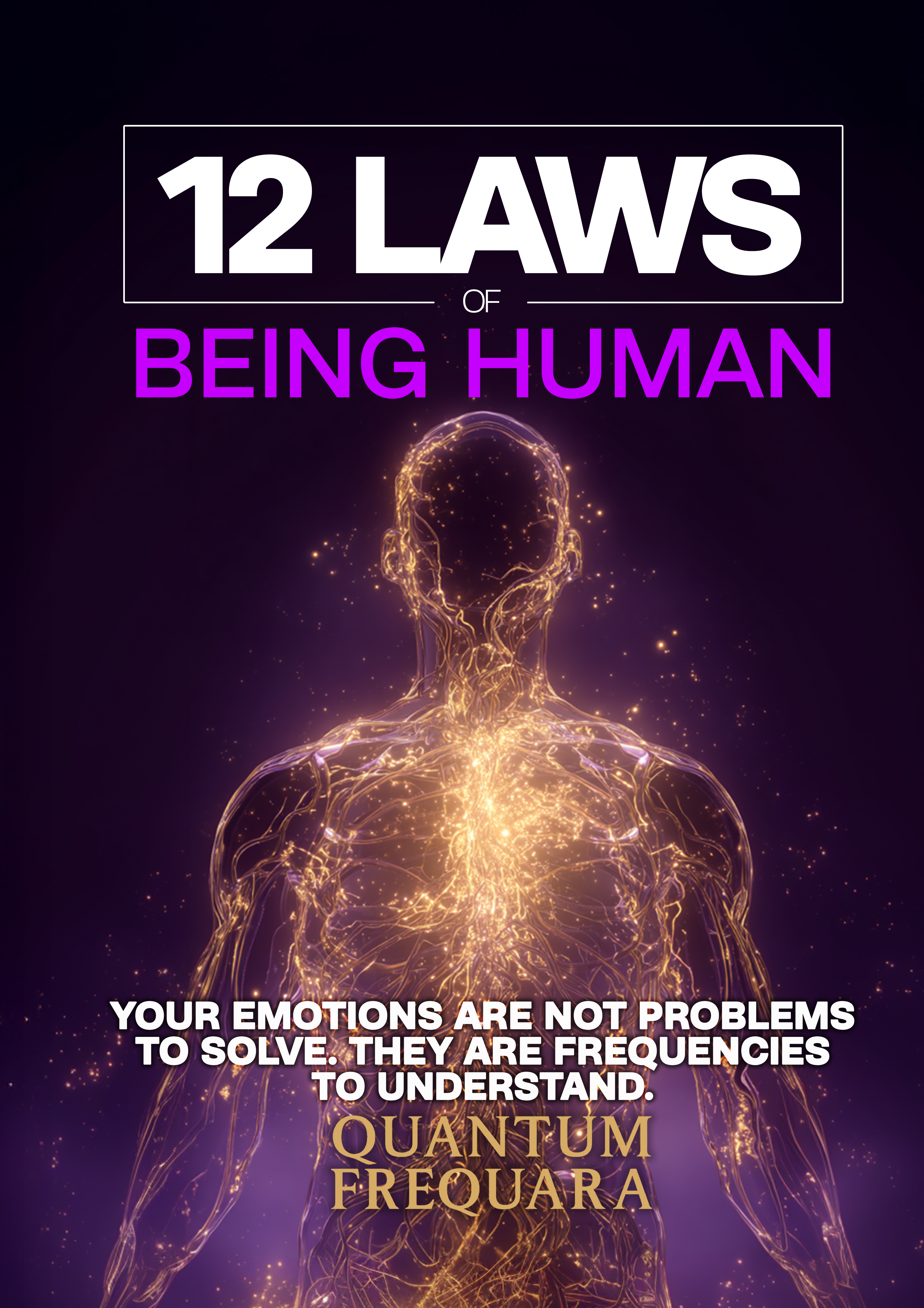
The 12 Laws of Being Human
Understand how emotions function as an intelligence system, why sensitivity is a feature not a bug, and how to work with your nervous system instead of against it. Explore the frequency laws that govern human consciousness.
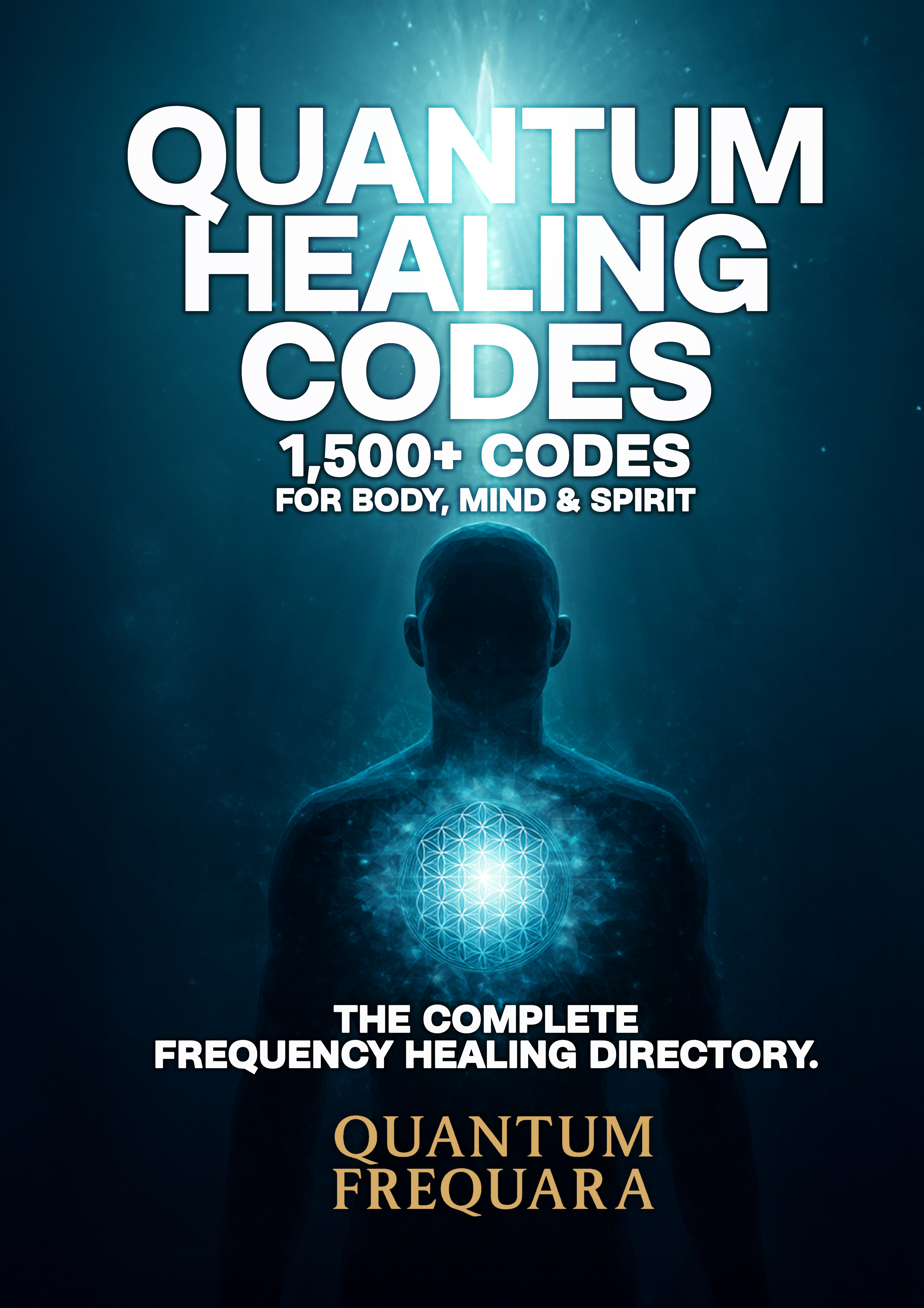
Continue your work with the codes. Quantum Healing Codes contains 1,500+ intentional number sequences across 40+ categories — pain, sleep, anxiety, manifestation, and more — paired with the full activation guide and the Frequara Starter Set.