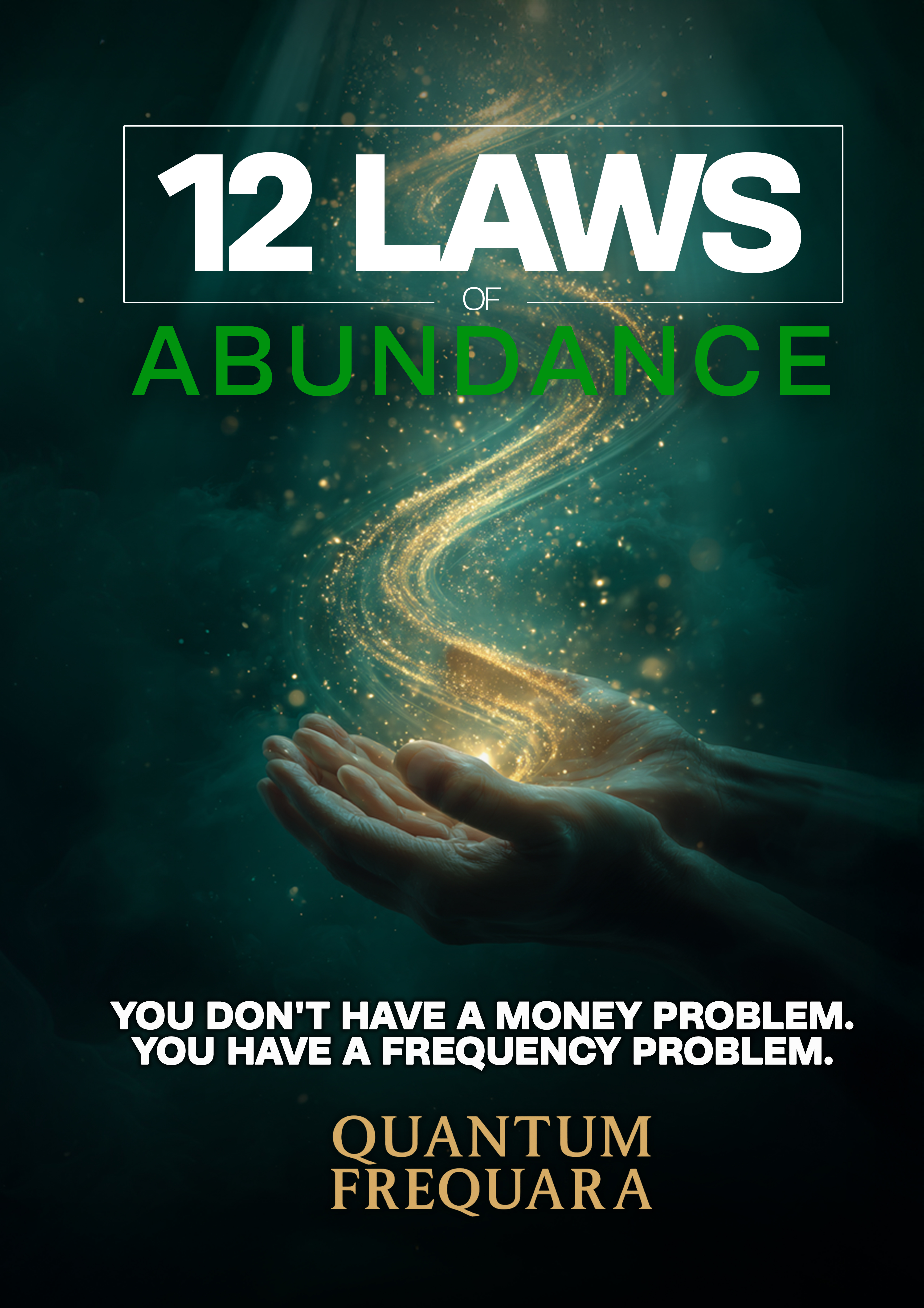
It is 11:47pm on a Wednesday in November, and Catherine is checking her bank balance for the second time in three hours. The number has not changed. By any sensible measure she is safe, and her body does not believe it. This book is about that gap, between what the numbers say and what your nervous system feels. It is not a book about earning more, budgeting or investing, and it says so in its first chapter. It looks at how your earliest experiences of money shaped what feels safe, and it offers a practice for each of twelve patterns.
"The opposite of scarcity is not more. It is enough."Quantum Frequara
The Default, Scarcity, Inheritance, the Container, Deserving, Exchange, Visibility, Enough, Receiving, Expansion, Contribution and Transmission. Three stages: the frequency you inherited, the patterns that keep you stuck, and the recalibration.
Sendhil Mullainathan and Eldar Shafir on how scarcity taxes attention, the Klontz work on "money scripts", and polyvagal theory (a model, parts of which are debated), explained for a reader who has a working budget and still lies awake.
Each law closes with the four steps (Recognise, Reset, Realign, Radiate) applied to that pattern, the signs it is active, and the signs a practice is settling in. Each chapter also names its failure state, including what tends to go wrong when you try to force a feeling of abundance.
Ten minutes, five parts: the Financial Check-In (one word for your state, not your balance), the Scarcity Scan, the Sufficiency Breath, the Receiving Practice and the Abundance Intention. The breath step asks for three things that are sufficient right now. Sufficient, not abundant.
Thirty-six questions, three for each law, leading to five profiles: the Hoarder, the Deflector, the Performer, the Striver and the Giver. In the book's words, a profile is not a diagnosis. It is a map of where your nervous system is currently operating.
Five protocols for acute money stress: the Financial Panic, the Spending Spiral, the Earning Freeze, the Abundance Backlash and the Inheritance Activation. The first one starts with steadying the body and a plain rule: no financial decisions for twenty-four hours. The chapter states its limits and says professional support comes first where there is domestic violence, coercive control or an acute mental health crisis.
You check the balance. The number is fine. You check it again an hour later.
You may have done the mindset work: the gratitude lists, the visualising, the affirmations. You may have a budget that works on paper. And underneath it, the same low hum is still there when a bill arrives, when someone offers you something, when it is time to name your price.
In the Frequara model, that hum is your frequency around money: the baseline state your body settles into when it handles worth, risk and safety. The book traces where it comes from (a kitchen table, a parent's tone of voice, the way money was talked about at home) and why understanding it has not been enough to quiet it.
The 12 Laws of Abundance is not a wealth system, and it is not law of attraction. It will not tell you how to invest, and it makes no promise about what you will earn. Its subject is your relationship with money: whether you can hold what you already have without bracing, receive without deflecting, and recognise enough when you reach it.
Each law comes with a story (Catherine and the 11:47pm balance check, Amara and her overfull cupboards, Raj and the kitchen he has not used in nine days), the research behind it, and a practice to try this week.
Your finances are steady on paper and the worry has not caught up with them.
Naming your price, asking for a raise or sending the invoice brings on a familiar tightness, and you would like to understand it.
Giving comes easily. Receiving a gift, a compliment or help makes you want to change the subject.
Rest feels risky, and "enough" has never been a number you could name.
You can still hear how money was talked about at home, and you notice the same tone turning up in your own life.
You want the research named and the limits admitted, with no promises about outcomes.
Out now on Amazon in paperback and Kindle. 12 laws, 17 chapters, a ten-minute daily practice, a 36-question diagnostic and five protocols for the moments money stress takes over.
Not financial advice and not medical advice. This book offers practices and perspectives for reflection. It makes no promise of income, wealth or any financial result. See a qualified financial or health professional about your own situation.
The Frequara Starter Set: ten codes from the Quantum Healing Codes directory, a 10-minute audio track, and the four steps of the Frequara Correction.
Sent free to your inbox, followed by seven short daily practices. No belief required. No equipment.