What to Read (and Do) After The Secret
The Secret opened the door. Then what? The books, practices, and Frequara Correction framework that pick up where The Secret left off. Honest reader's guide.
What to Read (and Do) After The Secret
Somewhere between the fifth vision board and the hundredth affirmation, most readers of The Secret start asking a quieter question. Not out loud. Usually not to the people who first handed them the book. But it sits there, patient, waiting to be answered.
“If this is true, why isn’t it working?”
You have felt it. Maybe you have felt it for a decade. You wrote the cheque to yourself. You watched the DVD twice. You practised gratitude, kept the journal, cycled through the meditations, cleared your resistance. Something shifted for a while, and then the old pattern crept back in. The mortgage. The relationship. The dysregulated nervous system that no amount of visualising has ever quite calmed.
This is not a failure of The Secret. It is a marker of your own growth. The book did what it was designed to do. It opened a door. It gave a whole generation the vocabulary to believe that inner state and outer reality are connected. That was never small. That was foundational.
What comes after the door is the actual work. And the actual work is not more affirmations. It is more mechanics. This guide is a reader’s map for the next stage, written for the person who honoured The Secret, took what it offered, and is now ready for what sits underneath.
What The Secret Got Right (that no one gives it credit for)
Before we get into what the book left out, it helps to name what it delivered. Three things worth honouring.
The premise that inner state matters is sound. The book’s “vibration” language is a metaphor, not physics, but the idea underneath holds up. Your internal state is not sealed inside your skull. It shows in your face, voice, posture and breathing, other people pick up on it, and it shapes how you act and how the world responds to you. The Secret brought that idea to a mainstream audience, and it said it in words a person on a Tuesday afternoon could understand.
It anchored millions of people to the possibility of choice. For most of the twentieth century, self-help was a niche section at the back of the bookstore. After The Secret, the idea that a person could actively shape their own life became a cultural default. That is a monumental shift in collective consciousness, and it happened partly because one book made the case in language people could feel. Anyone working in this space today is standing on that ground.
It made “manifestation” mainstream vocabulary. Words matter. Before the film, manifestation was a fringe term used by a small group of teachers. After the film, the concept was in every conversation about work, love, money, and health. That vocabulary is the ground we now stand on to have more precise conversations. We can only refine the language because The Secret first put it in the room.
Give the book its credit. Then look at where it stopped.
What The Secret Left Out
The Secret‘s model is simple. Think it. Feel it. Attract it. That simplicity was the marketing genius and, over time, the ceiling. There are at least four things the model does not cover.
The Signal Hierarchy. In the Frequara model, thought alone is a quiet signal. Identity is louder. Emotion is louder. The state of your body runs underneath all of them. When a person says “I am abundant” while their identity is running “I am someone who struggles,” the identity signal usually wins. Identity is the deepest layer of what you transmit, and it was not addressed in the original teaching.
The nervous system. If “frequency” is the metaphor, your autonomic nervous system is a good place to look for what it points at. When your body is braced in stress or has shut down, positive thinking struggles to get a hearing. Polyvagal theory, a model proposed by Stephen Porges and debated by other researchers, describes these as different nervous system states, and many people find it a useful map. The Secret did not use this vocabulary in 2006. It is widely used now.
Timeline reality. Manifestation frameworks tend to promise fast results and then quietly disappoint. Real change is slower and less predictable. In a University College London study led by Phillippa Lally, new daily habits took a median of 66 days to feel automatic, with a very wide range between people. Deeper shifts in identity usually take longer again. When a reader expects everything in a week and the actual arc is months or more, they conclude they failed. They did not fail. They were given the wrong timeline.
Systemic constraints. Some outcomes are not just about vibration. Structural realities, health conditions, economic contexts, and generational patterns are all part of the field you are creating within. A grounded practice acknowledges the field. It does not pretend that coherent thought alone dissolves every constraint. The teaching is more honest, and paradoxically more useful, when it names its limits.
None of this cancels the original premise. It refines it.
The Reader’s Path: Three Stages of Post-Secret Growth
If you are reading this, you are almost certainly already in Stage 1. The stages are not linear ladders. They are widening circles. Most readers move through all three and then keep returning to earlier ones with fresh eyes.
Stage 1: The Bridge. This is where you update the model without losing the magic. You keep the sense that inner state matters. You add the language of nervous system, coherence, identity, and signal. The right reading here does not talk you out of what The Secret opened. It gives you practical mechanics to work with. Some people stay here for months, and that is time well spent.
Stage 2: The Mechanics. This is where the daily practice shifts from visualisation to regulation. You spend less time picturing outcomes and more time tending the transmitter. Slow breathing. Noticing what your body is doing. Settling it before you act. For many people this is where change starts, and it is often invisible from the outside at first. The people around you may not notice. You might.
Stage 3: The Practice. This is the graduation from weekend workshops to daily protocols. Not intense, not dramatic, just consistent. A morning sequence. A midday check. An evening integration. People who describe lasting change tend to build a practice that runs quietly in the background of their life for a decade. There is no finish line here. There is only depth.
Each stage has its own reading list. Here is one honest version.
Books to Read Next
There is no shortage of books in this space. Most of them are variations on a theme. The list below is short on purpose. Six titles, each doing a specific job.
1. The Body Keeps the Score by Bessel van der Kolk. The bridge from thought to nervous system. If you read only one book after The Secret, this is it. Not a manifestation book at all, which is exactly why it belongs first. It explores how stress and trauma live in the body as well as the mind, which helps explain why affirmations alone often do not take root, and it gives you the somatic vocabulary the rest of the work depends on.
2. Anchored by Deb Dana. The plain-language introduction to polyvagal theory. Explains the theory’s ventral, sympathetic and dorsal states in a way you can actually use. Polyvagal theory is a model, and parts of it are debated by researchers, but many readers find it a useful map. Short, clear, warm. A good second read.
3. Breaking the Habit of Being Yourself by Joe Dispenza. The most credible bridge from The Secret‘s audience to the mechanics conversation. Dispenza sits between the two worlds, and his framing of the mind-body loop is a useful next step. Take what serves. Leave what feels stretched. The core work on identity and daily practice is useful, even where his science claims stretch past the research.
4. The Presence Process by Michael Brown. A ten-week guided practice, not a book to read. This one moves you from concept to embodiment. It is best worked through slowly, not skimmed. It is quiet, structured, and it asks something of you every day for seventy days.
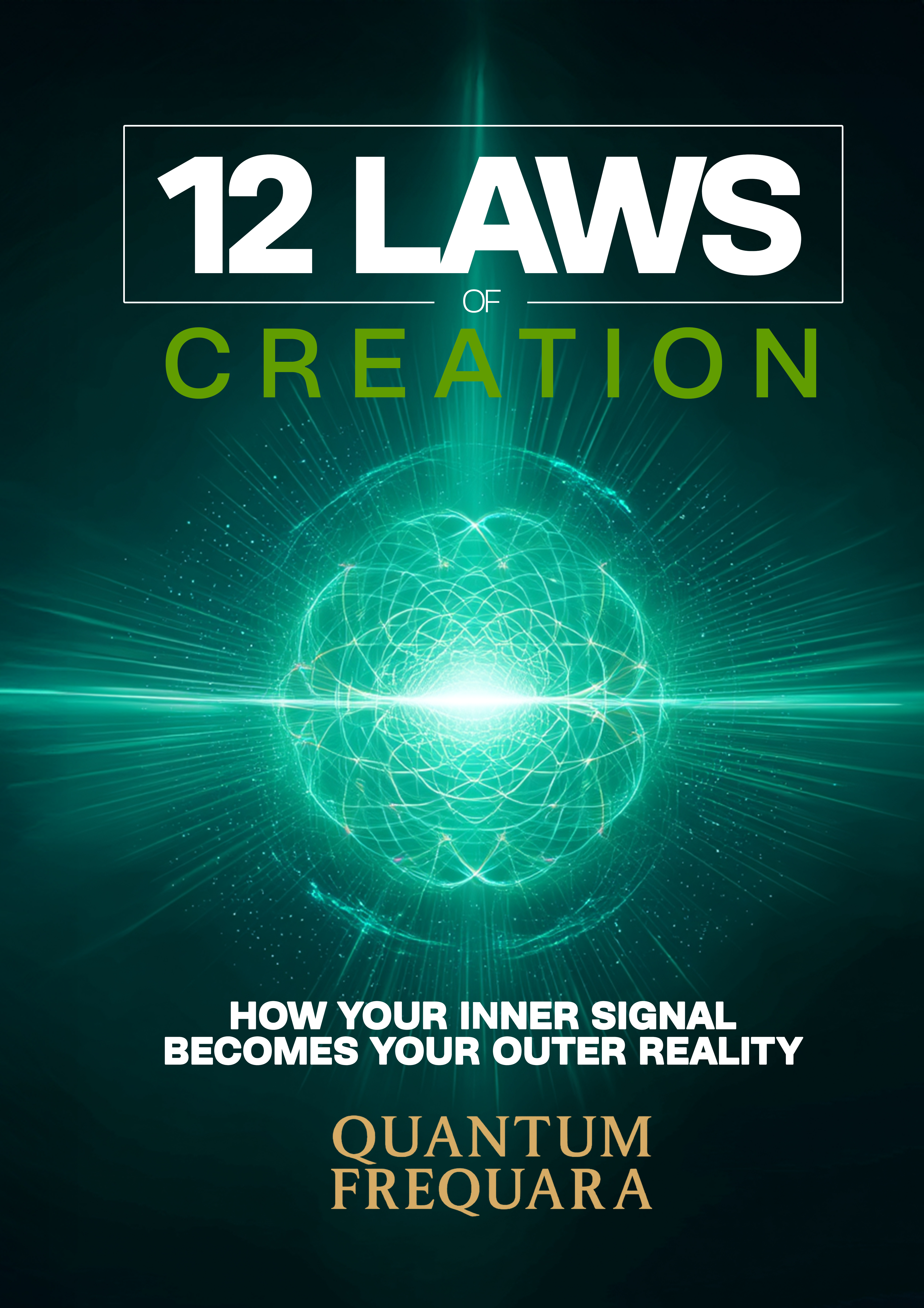
5. The 12 Laws of Creation by Quantum Frequara. Included honestly. This is the Quantum Frequara book that maps the Signal Hierarchy in plain terms and gives you the four-layer model for coherent broadcast: identity, emotion, thought, and action. Written specifically for the reader who has done the Secret work and is asking what comes next. If it is not for you, the four books above still stand.
6. Waking the Tiger by Peter Levine. For the person who suspects there is a trauma layer underneath the manifestation blocks. Levine’s work gives you language for how the body holds overwhelming experiences. A book is not a substitute for care: if trauma is part of your story, a trauma-informed therapist is the right companion for this layer.
Read one at a time. Take a month with each. Underline in pencil. Do not race through the list.
The One Practice Every Post-Secret Reader Should Add
Reading updates the model. Practice updates the body. If you add nothing else to your daily life, add this.
It is called the Frequara Correction. Four steps. Ten minutes. Once a day, ideally in the morning before the world reaches you.
Recognise. Sit for two minutes. Notice what state your nervous system is actually in right now. Not what you want to feel. What is here. Tight jaw. Braced shoulders. Shallow breath. Racing thought. Do not fix it. Just name it. Recognition is the first act of coherence. You cannot correct a signal you have not registered. Most people spend years trying to change a state they have never fully acknowledged.
Reset. Two minutes of a physiological down-regulation. The simplest version is a slow exhale, longer than your inhale, for six or eight cycles. Add a gentle self-hold, one hand on the heart, one on the belly. A longer out-breath slows the heart a little, and slow breathing is linked with higher heart rate variability, which many people find settling. Polyvagal theory would describe this as moving towards a ventral vagal state, though that part of the model is debated. This may be one reason The Secret‘s meditations helped on some days and not others. When your system was already fairly settled, the practice moved you the rest of the way. When it was not, the practice sat on top of a state that drowned it out.
Realign. Three minutes of identity work. Not affirmations. Identity statements built from your future self, spoken from a regulated state. “I am someone who follows through on what matters.” “I am someone whose word is good.” “I am someone who receives well.” The statement is more likely to land because your body is calmer. This is what makes it different from affirming while dysregulated. The signal is coherent because the layers are aligned.
Radiate. Three minutes to carry the state outward. Bring to mind one specific person or situation you will meet today. Not a wish. Not a demand. Keep breathing slowly and ask what someone living your Realign statement would do there, then choose one small action you will actually take. The HeartMath Institute claims the heart’s field measurably affects people nearby, but that is its own claim, not established physics. What is well established is simpler: people pick up on each other’s tone, posture and behaviour. The action is the part that travels.
Recognise. Reset. Realign. Radiate. Ten minutes. Every morning. Try it for a few months, then decide whether anything has changed.
A small daily practice like this can do more than a weekend workshop, a planner or a manifestation journal, because it works layer by layer, day after day, on the patterns you actually run.
What Progress Can Look Like (Honest Timelines)
Here is what nobody in the manifestation space says out loud. Real change is unglamorous. It looks like small, steady evidence over long stretches.
The first few weeks. You might notice you are a little less reactive. A conversation that would have rattled you passes more easily. Or you might notice very little, which is normal too. Experiences differ, and there is no schedule to keep up with.
The first few months. With regular practice, the pattern that used to define your last decade may start to loosen. You catch yourself in the old loop earlier. You choose differently once, then twice, then more often. As your behaviour changes, some things around you may change with it. Not miracles. Small openings. A message you finally send to someone you had drifted from. A piece of work you go after instead of waiting for.
Over a year or more. For some people, identity starts to move. Daily choices come from a different centre. Relationships adjust to meet the new you, or some fall away. You may go after work that fits the current version of you rather than the version who set out. This is what manifestation looks like when it is grounded in practice. It is quiet, and it builds on itself. None of it is guaranteed, and it does not follow a calendar.
The Secret asked you to believe. The next stage asks you to build. The good news is that the practice does not depend on belief. You keep choosing the state and acting from it, and your life has more room to follow.
If you want to keep going, the two most useful next reads on this site are Law of Attraction vs. Law of Creation and the deeper dive in The 12 Laws of Creation. Take one at a time. Let the practice do the work.
You have always been creating. The Secret named it. This is where you learn to do it consciously.