Brainwave Meditations: The Complete Beginner Guide
The 5 brainwave states explained. Which one suits rest, sleep, creativity or focus, what the research says about solfeggio frequencies and binaural beats, and the Frequara method.
Brainwave Meditations: The Complete Beginner Guide
You have been told that meditation works if you do it long enough. Twenty minutes. Forty minutes. An hour before dawn. The number varies, but the assumption underneath is the same: duration equals depth.
The assumption is too simple. Duration is a rough proxy. What matters more is the state you settle into and how steadily you stay there. A person who spends forty minutes sitting cross-legged while mentally running through a to-do list is meditating in name only. A person who spends eight minutes genuinely settled, with attention soft and steady, may have done more useful practice.
Brainwave states are one useful way to think about what is happening during meditation. Once you know which state you are aiming for, why you want it, and what tends to help, much of what beginners find confusing about meditation becomes clearer.
The 5 Brainwave States
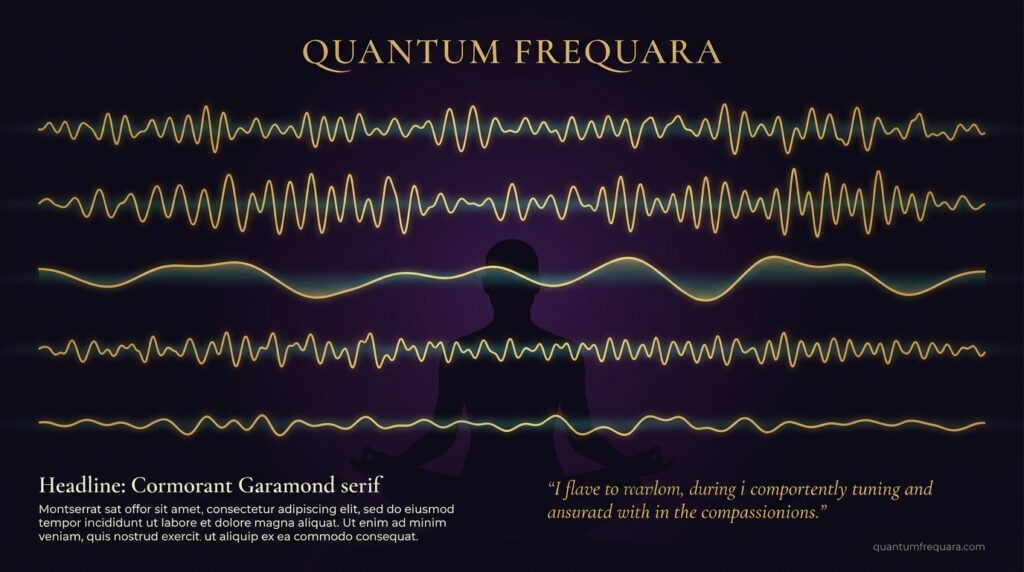
Your brain is constantly producing electrical activity. When it is measured with EEG, that activity shows rhythms at different frequencies, measured in hertz (cycles per second). Different frequency bands are linked with different states, such as alert thinking, relaxation and sleep.
Gamma (30 to 100 Hz)
The fastest band. Linked with focused attention and moments of insight. One small study of long-term Buddhist practitioners recorded strong gamma activity during compassion meditation, and this research is still developing. Gamma is not the target for most beginners, but it is worth knowing that researchers are studying how years of practice may relate to it.
What it feels like: crystalline focus, everything integrated, insight arriving with the quality of already knowing.
Beta (13 to 30 Hz)
Your waking, thinking, doing state. Beta is not the enemy. It is the state you need for working, driving, holding a conversation, solving problems. Stress, anxiety and racing thoughts are often linked with more high beta activity, though the relationship is not a simple one.
What it feels like: alert, engaged, sometimes wired.
Most beginners arrive at meditation trying to get out of that wired, high-alert state. That is the right instinct. The mistake is trying to jump straight to theta or delta. In practice, it usually helps to settle step by step rather than forcing a deep state.
Alpha (8 to 12 Hz)
The bridge state. Alpha activity tends to increase when you close your eyes, when you daydream, when you are physically relaxed but still alert. It is the doorway state for most meditation, and settling here first often makes deeper relaxation easier.
What it feels like: soft, receptive, present. Time slows slightly. The internal monologue quiets without disappearing.
Alpha is where most beginner meditation should aim for the first several weeks of practice. Building alpha access is the foundation on which the deeper states rest.
Theta (4 to 8 Hz)
Often called the dreamy or integration state. Theta activity shows up in drowsiness, in hypnagogia (the moments before sleep), during REM sleep and in some deep meditation. Many people describe theta-like states as a time when tension eases, the mind feels more open and creative ideas surface.
What it feels like: dreamlike, spacious, sometimes with fragments of imagery. Time reference gets loose. The boundary between waking and dreaming blurs.
Theta-like states are often what people mean when they say meditation is “working”. Longer sessions can sometimes bring up tears, emotional waves or old memories. That is common, but if it feels overwhelming, shorten your sessions (see the signs below).
Delta (0.5 to 4 Hz)
The deep restorative state. Delta dominates during dreamless sleep. Deep sleep is linked with growth hormone release and is thought to be important for physical recovery.
What it feels like: for most people, not much, because they are asleep. Some experienced meditators describe states of profound stillness with no thought content, but that is not something beginners need to aim for.
For beginners, delta is a target for sleep quality, not for meditation practice. Chasing delta while awake is a project for a later year.
Why Most Meditation Advice Skips This
Look at popular meditation instruction and you will notice something. The instruction is almost always about what to do (sit, breathe, notice, return) and almost never about what to aim for. The assumption is that if you do the practice correctly, the right state will arrive.
This is partly true and partly a way of avoiding a harder conversation. The harder conversation is that different meditation goals suit different states, and the practices linked with relaxed alpha are not the same as those linked with dreamy theta, and neither is what you want if your goal is sharp focus.
The generic mindfulness instruction is optimised for one thing: building the capacity to observe your own attention without reacting to it. That is valuable, and over time it can deepen. But it works the same way for every goal, which may be one reason some people find the benefits of their practice hard to pin down.
If you know which state you are aiming for, you can choose a technique that suits it.
Which State You Actually Want
The correct target depends on what you are trying to do.
For deep rest and nervous system regulation: alpha, moving into theta. Slow breathing, extended exhale, guided body scans, calm background sound such as a low solfeggio tone if you enjoy it. Twenty to forty minutes if available. Slow breathing with a long exhale is linked with higher heart rate variability, and some people find it deeply restful.
For creative insight and problem-solving: theta. Practices that let the mind drift with a light anchor. A long shower, walking in nature, hypnagogic dropping-in practices, longer sessions of open-monitoring meditation. Focused-attention meditation is usually less suited to this goal.
For emotional processing and reflection: theta, with gentle body awareness. Longer sessions with permission to notice sensation. Soft background sound, such as a 396 Hz or 528 Hz track, if you enjoy it. Sound bath settings. Some people find held emotion surfaces here. This is a practice for reflection, not a treatment for trauma, grief or low mood.
For sleep quality: delta, entered through theta. Pre-sleep practice of extended exhale, dim light and, if you want to experiment, low frequency binaural beats around 2 to 4 Hz, although research on binaural beats is mixed. Not stimulating meditation. Not late-evening insight practice.
For focus and cognitive performance: alpha with periodic beta engagement. Short focused-attention sessions, ten to fifteen minutes, before work rather than during it. Some people find a short settling practice helps them stay focused for longer without tipping into stress.
Naming the target changes the practice. Many people use one meditation practice for every goal and wonder why the results vary.
How Solfeggio Frequencies and Binaural Beats Relate to Brainwaves
Solfeggio frequencies are a set of tones (174 Hz, 285 Hz, 396 Hz, 417 Hz, 528 Hz, 639 Hz, 741 Hz, 852 Hz, 963 Hz). They are audible pitches, far faster than any brainwave rhythm, so any link with brainwave state is not about the pitch matching a brain rhythm.
The idea usually offered is entrainment: the brain’s electrical activity can follow a steady rhythm in sound, and the brain’s response to rhythmic sound (sometimes called the frequency-following response) can be recorded. Whether that shifts your overall state is less clear. Binaural beats, where slightly different frequencies are played in each ear, produce a perceived beat at the difference between the two, and a 6 Hz difference is often used in theta tracks. Research on whether binaural beats change brainwaves, mood or relaxation is mixed: some studies report effects and others find none.
Solfeggio frequencies are not magic in themselves. There is no reliable evidence that they hold your brain in a particular state. What they can do is give you a steady, calm sound to rest your attention on, and some people find that makes settling easier. Think of the tone as a support for attention, not a mechanism.
For a longer treatment of the tones and their traditional attributions, the solfeggio frequencies explained article covers the history and what the evidence shows in more depth.
The Frequara Approach to Brainwave Meditation
The Frequara Correction fits well with brainwave meditation as a way to structure a session, which is one reason the two work together.
Recognise. Before you start, notice what state you are in. If your mind is racing and your body is braced, you are probably in a high-alert, beta-heavy state. Trying to jump into theta from there is like trying to fall asleep at a party. Name the current state without judgement.
Reset. Settle first. Sixty to ninety seconds of humming, extended exhale, or cold water on the face. This is not part of the meditation. It is the pre-meditation step that most instruction skips. You are helping your body settle, so that the meditation begins from a calmer place.
Realign. Enter the meditation from that calmer place. If you find it grounding, use slow alternating hand tapping or gentle side-to-side movement in the first two minutes. Then settle into the technique that suits your target state.
Radiate. In the final two to five minutes, before opening your eyes, rest your attention at the heart centre. This is the anchoring phase. You are not affirming anything. You are noticing what the settled state feels like in your body, so it is easier to recognise and return to next time. In the Frequara model, this is the frequency you are choosing to practise.
Practised this way, meditation stops being a hopeful daily gesture and becomes a specific, repeatable practice for settling your nervous system.
A 4-Week Brainwave Meditation Protocol
Week one: build alpha access. Ten minutes daily. Extended exhale breathing. Eyes closed. Focus on the exhale being longer than the inhale. Do not chase a state. You are building the doorway.
Week two: extend into theta. Fifteen minutes daily. First five minutes: same as week one. Next ten minutes: let the attention soften into open awareness rather than focused breath. Allow imagery, sensation, drift. Do not follow thoughts. Do not push them away.
Week three: add sound. Twenty minutes daily. Play a solfeggio track that matches your goal (traditionally 528 Hz for integration, 396 Hz for release, 741 Hz for clarity). Same structure as week two. Notice whether the sound changes how easily you settle. If it makes no difference, or distracts you, leave it out.
Week four: refine the target. Twenty to thirty minutes daily. Choose one specific goal for the week (rest, insight, integration, or focus) and select the technique that matches. Track what happens in the hours after each session. You are building your own record of which practice seems to help with what.
After four weeks, you will have a clearer sense of which practices suit which goals for you. Progress varies a lot between people, so take longer if you need to.
When It Is Not Working: 5 Signs
You end sessions more agitated than you began. You may be staying on high alert throughout. Add a longer settling reset before the practice starts.
You fall asleep every session. This is often a sign that you are short on sleep. Look after your sleep first, and if tiredness keeps going, see a doctor. Meditation is not a substitute for sleep.
Nothing shifts in daily life. You may be practising in a state disconnected from your daily nervous system baseline. Try shorter, more frequent sessions distributed across the day rather than one long block.
Emotional waves overwhelm you. Strong feelings may be surfacing faster than you can comfortably process them. Shorten sessions. Add grounding, such as feeling your feet on the floor. If this keeps happening, or old trauma is surfacing, pause the practice and speak with a qualified mental health professional.
You feel spiritually disconnected the rest of the day. The meditation is compartmentalised. Add micro-corrections through the day, sixty seconds of the same practice, to blend the meditative state with waking activity.
The point of brainwave meditation is not the meditation itself. It is the steadier everyday baseline that some people notice with regular practice over time. If you are not noticing any change in daily life after a fair trial, adjust the practice.
Where to Take This Next
The solfeggio frequencies explained article covers the tones in more depth if you want to build a working audio library. For the healing codes and frequency directory that most Quantum Frequara readers use alongside their meditation practice, the Quantum Healing Codes book gathers over 1,500 numerical sequences paired with the full activation guide.
Brainwave states are one bridge between meditation and neuroscience. Once you can name the state you want, the rest of the instruction becomes much easier to follow.